


Sometimes, we all just need to get away, whether from work, home, or just in general. It’s not always about fancy hotels, exquisite places to eat or expensive things to buy, it can be all about family time without interruptions. One way I enjoy getting away with the family is to go camping. It doesn’t sound like it would be that fantastic, but once you get out there in the open, away from technology, you may feel so much better like I always do.
Here is our list of the Top 5 Best National Parks for Camping in the United States:
Yosemite National Park-California
I’m sure this is a name that you are familiar with, whether you’ve read about it or heard about it on television. This park has been protected since 1864 and is best known for its beautiful waterfalls. In this 1,200 square mile park, you can enjoy meadows, sequoias, the wilderness areas, and deep valleys. If you are up to a challenge you can even hike up the cables of Half Dome for a one of a kind view like my son just did last week.

Camping is extremely popular in this park. There are three areas that offer camping with multiple different campgrounds in each area. These all have their own opening and closing date as well as what is allowed in the park and what isn’t in terms of travel and sleep. Most campgrounds allow RV’s, so if that’s how you’re traveling, you’ll be in luck.
The Adirondack Park-New York
I’ve personally been here and let me tell you something-it’s absolutely beautiful. In fact I spent a lot of time here growing up and after all my travel it remains one of my very favorite places on Earth! It’s one of the largest national parks in the United States. It’s bigger than the Everglades, Glacier, Grand Canyon, and Yellowstone National parks combined. It has an area of 6 million acres and half of it has been constitutionally protected by the forest preserve to remain forever wild.

Inside of this massive area, you’ll find an enormous variety of campgrounds for your family to enjoy. These include RV parks, tents, and others. Since this is such a large area with tons of mountains, steep cliffs, lakes, and valleys.
Glacier Bay National Park-Alaska
I’d love to go camping or at least travel to Alaska someday. This park features deep glacial fjords and high peaks, making it one of the most amazing places to view the scenery. Glacier Bay is a significant marine and terrestrial wilderness sanctuary, making the experience that much more amazing. It is also one of the largest protected Biosphere Reserves in the world.

If you decide that Glacier Bay may be the right spot for you, there are only a few campgrounds to choose from. Barlett Cove is one of their most popular walk-in campgrounds. If you go here, you’ll get a permit and bear-resistant food containers. You must also attend a 30-minute orientation so that you’re fully prepared for camping there and what their rules and regulations are.
Acadia National Park-Maine
Want to go camping in the winter? No problem! Acadia National Park features campgrounds that are open all year round with certain restrictions. This is one heck of an adventure if you plan to do it in the winter. In order to get to some of these campgrounds, such as the Blackwoods Campground, you have to hike there because the road is closed off to automobiles. Sites are also limited during this time of year (December-March). You’ll also only get water from a hand pump and you’ll get a portable toilet.

If you plan to camp during prime time, it’s suggested that you make a reservation at a lot of these campgrounds because of how popular the area is. Surrounding the area, you’ll find stunning lighthouses, beautiful nature, wildlife creatures, and great seafood.
Hot Springs National Park-Arkansas
Hot Springs National Park is also known as “The American Spa”. This park surrounds the north end of Hot Springs, Arkansas. In this area you’ll find thermal water. You can take a traditional bath at the Buckstaff Bathhouse or you can have a wonderful spa experience at the Quapaw Baths and Spa. You can also visit the hot springs where you can taste and feel the water.

Throughout the park, you’ll find geothermal areas. These areas are hot springs that you can enjoy. They can be found along the western side of Hot Springs Mountain in the downtown area of the city. There are also multiple campgrounds that you can enjoy if you’re passing through or plan a vacation there.
I’m sure this is a name that you are familiar with, whether you’ve read about it or heard about it on television. This park has been protected since 1864 and is best known for its beautiful waterfalls. In this 1,200 square mile park, you can enjoy meadows, sequoias, the wilderness areas, and deep valleys. If you are up to a challenge you can even hike up the cables of Half Dome for a one of a kind view like my son just did last week.

Camping is extremely popular in this park. There are three areas that offer camping with multiple different campgrounds in each area. These all have their own opening and closing date as well as what is allowed in the park and what isn’t in terms of travel and sleep. Most campgrounds allow RV’s, so if that’s how you’re traveling, you’ll be in luck.
The Adirondack Park-New York
I’ve personally been here and let me tell you something-it’s absolutely beautiful. In fact I spent a lot of time here growing up and after all my travel it remains one of my very favorite places on Earth! It’s one of the largest national parks in the United States. It’s bigger than the Everglades, Glacier, Grand Canyon, and Yellowstone National parks combined. It has an area of 6 million acres and half of it has been constitutionally protected by the forest preserve to remain forever wild.

Inside of this massive area, you’ll find an enormous variety of campgrounds for your family to enjoy. These include RV parks, tents, and others. Since this is such a large area with tons of mountains, steep cliffs, lakes, and valleys.
Glacier Bay National Park-Alaska
I’d love to go camping or at least travel to Alaska someday. This park features deep glacial fjords and high peaks, making it one of the most amazing places to view the scenery. Glacier Bay is a significant marine and terrestrial wilderness sanctuary, making the experience that much more amazing. It is also one of the largest protected Biosphere Reserves in the world.

If you decide that Glacier Bay may be the right spot for you, there are only a few campgrounds to choose from. Barlett Cove is one of their most popular walk-in campgrounds. If you go here, you’ll get a permit and bear-resistant food containers. You must also attend a 30-minute orientation so that you’re fully prepared for camping there and what their rules and regulations are.
Acadia National Park-Maine
Want to go camping in the winter? No problem! Acadia National Park features campgrounds that are open all year round with certain restrictions. This is one heck of an adventure if you plan to do it in the winter. In order to get to some of these campgrounds, such as the Blackwoods Campground, you have to hike there because the road is closed off to automobiles. Sites are also limited during this time of year (December-March). You’ll also only get water from a hand pump and you’ll get a portable toilet.

If you plan to camp during prime time, it’s suggested that you make a reservation at a lot of these campgrounds because of how popular the area is. Surrounding the area, you’ll find stunning lighthouses, beautiful nature, wildlife creatures, and great seafood.
Hot Springs National Park-Arkansas
Hot Springs National Park is also known as “The American Spa”. This park surrounds the north end of Hot Springs, Arkansas. In this area you’ll find thermal water. You can take a traditional bath at the Buckstaff Bathhouse or you can have a wonderful spa experience at the Quapaw Baths and Spa. You can also visit the hot springs where you can taste and feel the water.

Throughout the park, you’ll find geothermal areas. These areas are hot springs that you can enjoy. They can be found along the western side of Hot Springs Mountain in the downtown area of the city. There are also multiple campgrounds that you can enjoy if you’re passing through or plan a vacation there.
And there you have it! The top 5 best national parks for camping in the United States to take your family to on your next road trip. These parks are scattered all around the United States and there are even more than what is on this list. Camping is such a fun family experience and it gives you plenty of time to bond with each other while fishing, hiking, or just enjoying a nice walk. And don't forget to bring a saw with you for gathering and cutting firewood for that perfect campfire experience your family will never forget.

Everything was looking good. We were ready. And then catastrophe struck! We had found out two weeks before that the trip had been moved a week sooner than planned and we weren’t going to make it. I, however, had already booked a ticket to California for the trip. So, I grabbed my best hand luggage and was off without a plan in sight.
After my arrival, we began to research other things we could explore in Yosemite. We figured we could drive up to the park on our own and see whatever we could without permitting. We were under the assumption that there was no way to climb Half Dome without the permits that must be reserved months in advance. So, we began our search for all the exciting things to see throughout the park and found that even without our previous goal, there was still enough to keep a nature lover busy for years.
We discovered an article explaining the reason why you needed a permit to climb Half Dome was to keep the crowds down to a controllable level. The only way up is with two cables lifted off the rock face to form a handrail. Even with strict permitting, these cables are insanely mobbed during the summer months. What we didn’t know was that the cables don’t go up until mid-May and go back down at the end of summer. However, the cables don’t actually go anywhere. They’re only lowered off the stands that hold them up for easy access.

Even though they can’t legally stop you, anyone you ask in the park service will explain the danger of a 400-foot vertical gain on a 45-degree slope of slick granite. All that on top of the 8,000 + feet in elevation. We were also told that in this “shoulder season” there are no rangers up there so we would be alone should something happen. Needless to say, they don’t want you up there when they aren’t in control.
Being young and crazy, we decided to go for it anyway. Without an ounce of a plan, we called a couple friends and picked a date. And by the time we all met up, we had a grand total of one day to buy and pack everything we would need in the car. Walmart was surprisingly good for our tight budget. We were able to get everything on our list for a three-day camping trip. With, food out of the way and other camping gear acquired from a friend we were as prepared as we were ever gonna be. Here’s how it went!

The only campsite we could find for the first night was just outside the boundary of the park and was flooded with people overflowing from the limited camping available in the park. We stopped only long enough to set up camp and then we were off to explore what we could before the sun went down. The drive to the main entrance got more and more stunning the closer we got. Every corner revealing a new unbelievable view. And that wasn’t even the park yet! Once through the main gate, the road entering the park goes through a series of tunnels as it traverses the dramatic landscape.
Finally, we made it down into the Yosemite Valley and decided to drive the main loop around the park and stop when we saw something interesting. Which incidentally was everything. Before we even got to our first pick on the map we saw a group of people off the side of the road looking at something. And of course, we stop to see only to find a family of bears casually strolling by. I guess I can check seeing wild bears off my bucket list.

Back at camp, we discussed the game plan over dinner. Which was to get up at the crack of dawn and go straight down to the ranger station to get on the waiting list for the first come first serve camping permits. Our plan was to camp at the Little Yosemite Valley campground which is the halfway point. Even though the hike can be done in a day we decided to try for the permit and break it up. By the time we got up to the counter, I was frantically doing the math on how many permits were left. And just as we took the last step I realized there were exactly four left. It couldn’t have been luckier. The universe was on our side. And we were finally ready!
Our next big challenge and probably the biggest was trying to find a spot in the overnight parking lot. Three of us split up and searched for a spot while the other drove. And by the time we found a spot, it was a race to get on the trail. We popped the trunk, threw our packs over our shoulders and just like that we were underway.

Vernal Falls
It started with a huge boost of excitement and energy as we marched up into the mountains. We climbed higher and higher up through valley and passed two of the most famous waterfalls in Yosemite, Vernal and Nevada falls. I started to realize why it was called the “mist trail” when we passed just under Vernal falls and got blasted by mist the whole time. By the time we reached the top, we were soaking wet from climbing the steps beside the 300-foot waterfall.
Nevada falls with Half Dome behind it
The next five miles to our campsite felt like ten from all the zig-zagging we did up the mountains on the more primitive trail. As we approached the campsite we all got a boost of energy knowing that we could soon relax once we set up camp. We split into teams, two of us went to collect and filter water from the nearby stream and two stayed back to pitch the tent. I excitedly asked to be on the water team. Something about collecting water from a beautiful stream in the middle of the forest just felt right. I was very pleased with myself as I carried everyone’s water back to camp. After scaring off a coyote from our camp we cooked dinner with our little Bunsen burner. With our bellies full we went to bed early for the big day.We woke up with the sun and got right to it. Leaving most of our gear at camp we were able to take only what we needed for the final climb. Then we set off on the four-mile hike to what is called the sub dome. The sub dome is where the cables began and were the finale 400 vertical foot stretch of our journey. On our way up the trail, we snapped a selfie with the sign telling us the cables were down and it was “highly dangerous to climb” at this time of year. We figured if we didn’t come back at least there would be proof of our stupidity. I’m happy to report that we made it!

After pushing past every obstacle in our path we finally made it. We were standing in front of the dome. No one in sight, just two little cables swaying in the wind. All the joking and conversation stopped abruptly, and I was hit with a sudden adrenaline rush at the thought of scaling this giant in front of us. I broke the silence and told everyone we should take a break to plan our ascent.
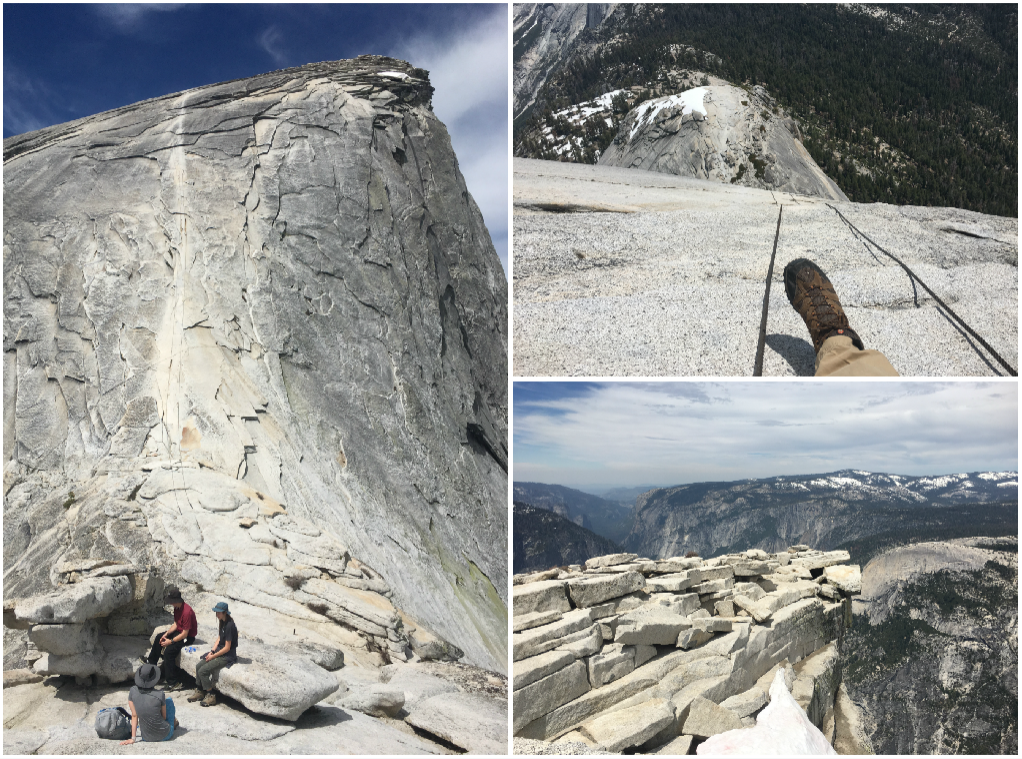

The way down was relatively uneventful aside from the buff rock climbers we met who thought we were “savage” for climbing with nothing but our hands. It was a great feeling knowing we didn’t die!
Sometimes, we all just need to get away, whether from work, home, or just in general. It’s not always about fancy hotels, exquisite places to eat or expensive things to buy, it can be all about family time without interruptions. One way I enjoy getting away with the family is to go camping. It doesn’t sound like it would be that fantastic, but once you get out there in the open, away from technology, you may feel so much better like I always do.
Yosemite National Park-California
I’m sure this is a name that you are familiar with, whether you’ve read about it or heard about it on television. This park has been protected since 1864 and is best known for its beautiful waterfalls. In this 1,200 square mile park, you can enjoy meadows, sequoias, the wilderness areas, and deep valleys. If you are up to a challenge you can even hike up the cables of Half Dome for a one of a kind view like my son just did last week.
Camping is extremely popular in this park. There are three areas that offer camping with multiple different campgrounds in each area. These all have their own opening and closing date as well as what is allowed in the park and what isn’t in terms of travel and sleep. Most campgrounds allow RV’s, so if that’s how you’re traveling, you’ll be in luck.
The Adirondack Park-New York
I’ve personally been here and let me tell you something-it’s absolutely beautiful. In fact I spent a lot of time here growing up and after all my travel it remains one of my very favorite places on Earth! It’s one of the largest national parks in the United States. It’s bigger than the Everglades, Glacier, Grand Canyon, and Yellowstone National parks combined. It has an area of 6 million acres and half of it has been constitutionally protected by the forest preserve to remain forever wild.
Inside of this massive area, you’ll find an enormous variety of campgrounds for your family to enjoy. These include RV parks, tents, and others. Since this is such a large area with tons of mountains, steep cliffs, lakes, and valleys, I suggest you invest in a good hybrid mattress in that RV if you use one. This way you can get the proper rest to ensure you enjoy the days ahead.
Glacier Bay National Park-Alaska
I’d love to go camping or at least travel to Alaska someday. This park features deep glacial fjords and high peaks, making it one of the most amazing places to view the scenery. Glacier Bay is a significant marine and terrestrial wilderness sanctuary, making the experience that much more amazing. It is also one of the largest protected Biosphere Reserves in the world.
If you decide that Glacier Bay may be the right spot for you, there are only a few campgrounds to choose from. Barlett Cove is one of their most popular walk-in campgrounds. If you go here, you’ll get a permit and bear-resistant food containers. You must also attend a 30-minute orientation so that you’re fully prepared for camping there and what their rules and regulations are.
Acadia National Park-Maine
Want to go camping in the winter? No problem! Acadia National Park features campgrounds that are open all year round with certain restrictions. This is one heck of an adventure if you plan to do it in the winter. In order to get to some of these campgrounds, such as the Blackwoods Campground, you have to hike there because the road is closed off to automobiles. Sites are also limited during this time of year (December-March). You’ll also only get water from a hand pump and you’ll get a portable toilet.
If you plan to camp during prime time, it’s suggested that you make a reservation at a lot of these campgrounds because of how popular the area is. Surrounding the area, you’ll find stunning lighthouses, beautiful nature, wildlife creatures, and great seafood.
Hot Springs National Park-Arkansas
Hot Springs National Park is also known as “The American Spa”. This park surrounds the north end of Hot Springs, Arkansas. In this area you’ll find thermal water. You can take a traditional bath at the Buckstaff Bathhouse or you can have a wonderful spa experience at the Quapaw Baths and Spa. You can also visit the hot springs where you can taste and feel the water.
Throughout the park, you’ll find geothermal areas. These areas are hot springs that you can enjoy. They can be found along the western side of Hot Springs Mountain in the downtown area of the city. There are also multiple campgrounds that you can enjoy if you’re passing through or plan a vacation there.
Yosemite National Park-California
I’m sure this is a name that you are familiar with, whether you’ve read about it or heard about it on television. This park has been protected since 1864 and is best known for its beautiful waterfalls. In this 1,200 square mile park, you can enjoy meadows, sequoias, the wilderness areas, and deep valleys. If you are up to a challenge you can even hike up the cables of Half Dome for a one of a kind view like my son just did last week.
Camping is extremely popular in this park. There are three areas that offer camping with multiple different campgrounds in each area. These all have their own opening and closing date as well as what is allowed in the park and what isn’t in terms of travel and sleep. Most campgrounds allow RV’s, so if that’s how you’re traveling, you’ll be in luck.
The Adirondack Park-New York
I’ve personally been here and let me tell you something-it’s absolutely beautiful. In fact I spent a lot of time here growing up and after all my travel it remains one of my very favorite places on Earth! It’s one of the largest national parks in the United States. It’s bigger than the Everglades, Glacier, Grand Canyon, and Yellowstone National parks combined. It has an area of 6 million acres and half of it has been constitutionally protected by the forest preserve to remain forever wild.
Inside of this massive area, you’ll find an enormous variety of campgrounds for your family to enjoy. These include RV parks, tents, and others. Since this is such a large area with tons of mountains, steep cliffs, lakes, and valleys, I suggest you invest in a good hybrid mattress in that RV if you use one. This way you can get the proper rest to ensure you enjoy the days ahead.
Glacier Bay National Park-Alaska
I’d love to go camping or at least travel to Alaska someday. This park features deep glacial fjords and high peaks, making it one of the most amazing places to view the scenery. Glacier Bay is a significant marine and terrestrial wilderness sanctuary, making the experience that much more amazing. It is also one of the largest protected Biosphere Reserves in the world.
If you decide that Glacier Bay may be the right spot for you, there are only a few campgrounds to choose from. Barlett Cove is one of their most popular walk-in campgrounds. If you go here, you’ll get a permit and bear-resistant food containers. You must also attend a 30-minute orientation so that you’re fully prepared for camping there and what their rules and regulations are.
Acadia National Park-Maine
Want to go camping in the winter? No problem! Acadia National Park features campgrounds that are open all year round with certain restrictions. This is one heck of an adventure if you plan to do it in the winter. In order to get to some of these campgrounds, such as the Blackwoods Campground, you have to hike there because the road is closed off to automobiles. Sites are also limited during this time of year (December-March). You’ll also only get water from a hand pump and you’ll get a portable toilet.
If you plan to camp during prime time, it’s suggested that you make a reservation at a lot of these campgrounds because of how popular the area is. Surrounding the area, you’ll find stunning lighthouses, beautiful nature, wildlife creatures, and great seafood.
Hot Springs National Park-Arkansas
Hot Springs National Park is also known as “The American Spa”. This park surrounds the north end of Hot Springs, Arkansas. In this area you’ll find thermal water. You can take a traditional bath at the Buckstaff Bathhouse or you can have a wonderful spa experience at the Quapaw Baths and Spa. You can also visit the hot springs where you can taste and feel the water.
Throughout the park, you’ll find geothermal areas. These areas are hot springs that you can enjoy. They can be found along the western side of Hot Springs Mountain in the downtown area of the city. There are also multiple campgrounds that you can enjoy if you’re passing through or plan a vacation there.
And there you have it! 5 of the most beautiful national parks to take your family camping. These parks are scattered all around the United States and there are even more than what is on this list. Camping is such a fun family experience and it gives you plenty of time to bond with each other while fishing, hiking, or just enjoying a nice walk. And don't forget to bring a saw with you for gathering and cutting firewood for that perfect campfire experience your family will never forget. You can pick one up here.
When planning a family trip a lot of different options pop up. Typically the choices you come across are from a vacation standpoint and what I usually find are beach getaways, ski holidays, or all inclusive resort type spots. While these can be great options, especially if rest and relaxation are on the ticket, there are alternatives.
Read on for 5 alternative options for your next family holiday.
Read on for 5 alternative options for your next family holiday.

Taking a campervan throughout the UK can be a very rewarding experience for everyone in the family. Not only do you not need to commit to one location to spend all of your time, but you can
get around to see many historical and famous landmarks that this great nation has to offer. It is possible to enjoy the busy city of London for one day and then head to the plains of Wales, or go north to the glorious Scottish Highlands for a breathe of fresh air and hiking. Your possibilities are limitless on this kind of vacation, and many people enjoy simply making it up as they go.
A Trip on the Transsiberian Railway

The Transsiberian Railway is a network of railways that link Moscow, Russia with the Sea of Japan. The full distance of the link overs over 9,000km and so it can be a very exciting way to see and take in the Eastern European countryside and culture. You can plan your whole trip based on stops that the train makes. This is by far one of the most efficient ways to get across the area while not having to worry about driving it yourself or getting lost.
A Cycling Holiday in France

The beautiful roads of the French countryside are enough to entice anyone to bring their bike to Europe. On a perfect sunny summer day taking a spin through the open lands of the country can be a fantastic activity for the whole family to bond over. The bike paths in most of Europe are highly tailored to the riding community, so you will find that there are amazingly smooth and easy to navigate. In addition to that, many places in France will have B&Bs on the side of their paths for you to stay in during your French cycling journey.
A Pilgrimage On the Camino de Santiago in Spain

For the adventurous souls, walking and hiking the Camino de Santiago in Spain is said to be for the most daring of people, as it is a very long walk across the country. Some believe that our ancestors of the past walked along it to get enlightenment, and even though it will take several weeks to complete you will feel like you have walked across the world. There are many different routes that you can take, but each pilgrimage path will surely help you burn calories and see sights that most people do not get to. There are plenty of resources that are there to aid the travelers such as restaurants and hotels, so there is no need to worry about that part of this walk.
Hiking and Camping in the Black Forest in Germany

Germany is home to many exotic environments, but what people don’t know is that the Black Forest is one of the most magical areas that you can take your family camping for a few days. The woods are thick and there are many resorts and campgrounds that you can stay at that are sure to suit your entire family. There are also many cute villages and towns throughout the Black Forest area that allow you to experience the authentic German culture and cooking during your stay.
So what do you think? Any of these sound like good alternatives for your family? Have you done one of these before? Tell us about it in the comments below!
Long gone are the days of lugging around hefty travel guides, maps and translation dictionaries; worrying about how much of your precious baggage weight allowance they will take up like I remember doing during my trip to Europe in 1998.
With the freedom to download travel apps, games, music and books - your phone or tablet is probably one of the most essential pieces of travel equipment you really need to carry with you.

If you are planning an up-coming trip backpacking around Australia and are looking to customise your mobile or tablet with useful apps then make sure you check out these 5 top apps for Australian travellers:
Appy Travels
This travel app is a great companion to any backpacking adventure and covers all of the main cities and major towns in Australia. One of the best things about this app is that other travellers constantly update it, so what you’re reading is up to date tips and advice.
This app includes:
If you’re visiting down under, then hiring a campervan is probably on your bucket list of things to do. After doing it myself I can assure you if it isn't on that list it should be! This app has over 40 detailed driving itineraries for your campervan trip, with information on top picnic spots, local hidden gems and scenic lookout points.
This app even has over 3000 photos of destinations and stop offs on the way – so know what to look out for. Either follow one of the pre-planned itineraries or plan your own unique road trip.
Wi-Fi Finder
Wi-Fi is essential for everything; from booking tomorrow nights hostel and researching campervans for sale online, to keeping in touch with your friends and family back home or for writing on and posting to your blog. Wi-Fi finder is a great app that helps you to identify the best Wi-Fi spots around you. In OZ these can be few and far between so it really is a great idea to have some idea of where you can hook up next!
The app works online and offline and is available for phones and tablets. You can even filter your Wi-Fi hot spot results by location (e.g. hotel, café, library).
MotorMouth
If you are on an Aussie road trip then petrol is likely to be one of the biggest outgoing costs to eat into your backpacker budget.
Download the MotorMouth app and save money by making sure you buy the cheapest fuel on your journey. This app is committed to making sure Australian’s get a better deal on their fuel, and lets you know when the best time to buy cheap fuel is each week, and where the nearest (and cheapest) petrol station is.
This app is essential if you are about to embark on the long leg of a road trip.
Trip Journal
Trip Journal is a great way to store and document your travel memories. This app is a quick and easy way of creating an online map of your journey that friends and family can follow on Facebook, YouTube and Twitter.
Add pinpoints to highlight your current location and upload photos, videos or comments as you go along – making it easy to impress everyone with your latest adventures.
With the freedom to download travel apps, games, music and books - your phone or tablet is probably one of the most essential pieces of travel equipment you really need to carry with you.
Appy Travels
This travel app is a great companion to any backpacking adventure and covers all of the main cities and major towns in Australia. One of the best things about this app is that other travellers constantly update it, so what you’re reading is up to date tips and advice.
This app includes:
- Local guides and tips on places to go
- Maps
- Local daily deals (great for a backpacker on a budget)
- Built in currency converter
- Video and photo gallery of places
- Weather updates
If you’re visiting down under, then hiring a campervan is probably on your bucket list of things to do. After doing it myself I can assure you if it isn't on that list it should be! This app has over 40 detailed driving itineraries for your campervan trip, with information on top picnic spots, local hidden gems and scenic lookout points.
This app even has over 3000 photos of destinations and stop offs on the way – so know what to look out for. Either follow one of the pre-planned itineraries or plan your own unique road trip.
Wi-Fi Finder
Wi-Fi is essential for everything; from booking tomorrow nights hostel and researching campervans for sale online, to keeping in touch with your friends and family back home or for writing on and posting to your blog. Wi-Fi finder is a great app that helps you to identify the best Wi-Fi spots around you. In OZ these can be few and far between so it really is a great idea to have some idea of where you can hook up next!
The app works online and offline and is available for phones and tablets. You can even filter your Wi-Fi hot spot results by location (e.g. hotel, café, library).
MotorMouth
If you are on an Aussie road trip then petrol is likely to be one of the biggest outgoing costs to eat into your backpacker budget.
Download the MotorMouth app and save money by making sure you buy the cheapest fuel on your journey. This app is committed to making sure Australian’s get a better deal on their fuel, and lets you know when the best time to buy cheap fuel is each week, and where the nearest (and cheapest) petrol station is.
This app is essential if you are about to embark on the long leg of a road trip.
Trip Journal
Trip Journal is a great way to store and document your travel memories. This app is a quick and easy way of creating an online map of your journey that friends and family can follow on Facebook, YouTube and Twitter.
Add pinpoints to highlight your current location and upload photos, videos or comments as you go along – making it easy to impress everyone with your latest adventures.
When families set off on holiday together there can be differing views of what is considered an ‘ideal’ holiday. This can be the case whether you’re travelling for your annual two-week vacation or if you’ve set off on a longer travel adventure with the family. Even couples that head off for a weekend together can have very different opinions on the best accommodation.

If you find yourself in the U.K. and discussing how one person wants to camp and another wants a fully serviced hotel, you might try Cornwall holidays in Looe and Polperro as a fabulous compromise.
Caravan holidays are an awesome way to give everyone a little of what they like.
Those yearning for a comfortable stay can expect everything they need to be on hand. Fully furnished caravans with digital TV’s, and DVD players are the norm. You won’t need to cart everything with you from home like you would for a full blown camping trip, as all your cutlery, crockery and linen are included too.
The beauty of this type of holiday is that you get all the social interaction of a camping holiday without having to sleep outside in the elements!
You’ll have access to full cooking facilities and comfortable beds without having to cook outside or spend time putting up your tent. Sea views are often possible depending on where you choose to rent a caravan and you can sleep up to 8 people. Once again, you avoid the need to bring all your own bedding like you would if you had set off to go camping.
In some caravans you’ll even be given the option to bring the family pet along. What a great way to save on holiday expenses. Boarding kennels for pets can really add to the cost of your time away.
Caravan holidays can often provide facilities like a swimming pool, a recreation hall and a close restaurant too. That means if you don’t want to cook each night you can stroll down to the restaurant and eat your fill right there.
Kid’s clubs open up during school holidays and local penny arcades are a fun way to turn back the clock a little and give your kids a glimpse of the past.
Cornwall offers plenty of sights to keep you busy while you’re visiting. There are several local festivals and shows that you can treat the family to. There’s an aquarium, and a zoo and you can rent bicycles or visit an adventure park. With quite an array of museums to visit no family holiday in Cornwall has any reason to be boring.
And if you really can’t shake that urge to go camping, you can always book yourself a site, pitch your tent and take full advantage of all the facilities on offer.
What better way to have a flexible and fun holiday than to plan to have it in a caravan?
Have you ever had a caravan holiday?
If you find yourself in the U.K. and discussing how one person wants to camp and another wants a fully serviced hotel, you might try Cornwall holidays in Looe and Polperro as a fabulous compromise.
Caravan holidays are an awesome way to give everyone a little of what they like.
Those yearning for a comfortable stay can expect everything they need to be on hand. Fully furnished caravans with digital TV’s, and DVD players are the norm. You won’t need to cart everything with you from home like you would for a full blown camping trip, as all your cutlery, crockery and linen are included too.
The beauty of this type of holiday is that you get all the social interaction of a camping holiday without having to sleep outside in the elements!
You’ll have access to full cooking facilities and comfortable beds without having to cook outside or spend time putting up your tent. Sea views are often possible depending on where you choose to rent a caravan and you can sleep up to 8 people. Once again, you avoid the need to bring all your own bedding like you would if you had set off to go camping.
In some caravans you’ll even be given the option to bring the family pet along. What a great way to save on holiday expenses. Boarding kennels for pets can really add to the cost of your time away.
Caravan holidays can often provide facilities like a swimming pool, a recreation hall and a close restaurant too. That means if you don’t want to cook each night you can stroll down to the restaurant and eat your fill right there.
Kid’s clubs open up during school holidays and local penny arcades are a fun way to turn back the clock a little and give your kids a glimpse of the past.
Cornwall offers plenty of sights to keep you busy while you’re visiting. There are several local festivals and shows that you can treat the family to. There’s an aquarium, and a zoo and you can rent bicycles or visit an adventure park. With quite an array of museums to visit no family holiday in Cornwall has any reason to be boring.
And if you really can’t shake that urge to go camping, you can always book yourself a site, pitch your tent and take full advantage of all the facilities on offer.
What better way to have a flexible and fun holiday than to plan to have it in a caravan?
Have you ever had a caravan holiday?
There is no better way to explore a new area than to drive through the cities and countryside in a camper. The freedom of the open road, the slow moving scenery, and the natural habitat within campgrounds makes for an excellent adventure.

When we were first offered a camper van for a week in Australia I was definitely concerned as we knew next to nothing about campers. When I realized it was a large camper and not just a van I was even more concerned. I knew I would be the only one driving since my husband would not be able to drive it because his license is written in Spanish.
The week before the actual trip my mind filled with worries about everything from if I would be able to steer it well enough, to if I would remember how to empty the toilet without making a mess. I will get into more details but the short and sweet of it is that managing this beautiful camper from Apollo Camper vans was so easy to manage that even my 14-year-old could do it all, in fact he did quite a bit of it, aside from the driving of course!
The driving
As with everything else on this self-drive holiday with Apollo, the driving was a piece of cake. We had the 6 berth Euro deluxe so it was sort of large compared to a van or a car that I am used to driving. I was shocked at how easy it maneuvered. The turning radius made it surprisingly agile. I had a Ford Expedition that was harder to turn!

There are two things you want to be particularly aware of if you're planning to hire a camper in Australia. Insurance covers most things on the camper but the two things it does not cover are the two things most likely to get damaged: the overhead and under carriage. While driving it is best to have a passenger and to have both of you maintain an awareness of any overhead situations like bridges, overpasses, and even low lying branches. The clearance on our camper was 3 meters. Equally important is the undercarriage so take special care to go slow when approaching any large potholes or speed bumps. Whatever you think you need for space give yourself a little bit extra and you can avoid causing damage to the vehicle.
Also remember that they drive on the opposite side of the road in Australia. Luckily I was quite used to it after being in Asia for over a year but either way it is easier than you might expect!
The electric and gas
The electric and gas tanks were also a source of concern for me, so much so that I downloaded and saved a video (Apollo provides on it's site) regarding the basics and 'how to' functionality of the lights and cooking in the motorhome.

Again this ended up being very straight forward and easy to manage. Only the cook top itself runs on gas, the rest is electric. We camped four nights and had a powered site each evening. For the electric it was as simple as plugging a cord to the side of the camper and the other end to the plug provided at the campsite. There is an electrical fuse box in the kitchen area all marked and easy to use. Once plugged in just flip the switches of what you want to use and that is it. There is some capability of using the lights from just the charge of the battery and there is also a gauge inside so you know how much time you have left. It doesn't charge very much and on the charge you cannot use the microwave or the air conditioning. As an aside, the TV will work even while driving, a particularly great thing by my children's standards.

The gas for cooking is also simple to use. The tank(s) is stored under the motor home in an easy to access compartment. You simply turn the valve on and then flip the switch in the electrical panel to power up the push button to ignite and fan above the cook top. Cook to your hearts content (3 burners provided) and then simply turn the gas off at the valve under the camper when you are done. It can stay on as long as you are not driving, but for peace of mind we turned it off as soon as the cooking was done.
The water tanks
The water system on the motorhome is 3 fold; a grey water waste tank, a sewage waste tank, and a usable water tank for the taps and shower. Both the grey water and usable water tanks have a gauge inside the electrical panel so you can stay on top of how full or empty you are getting. All intimidating at first but all simple to use. This part my son handled himself.
The grey water tank was simple to empty, you just connect the provided hose until it clicked in pace, pulled the lever to open it and the water flowed right out. Of course be sure the other end of the hose is pointed where ever it is appropriate to dump. We found most campsites have an easily accessible area.

The waste water tank was my biggest concern, but it turned out to be the easiest of them all. On the Apollo motorhomes it is a self-contained bin that you remove and roll down (think a suitcase of poo with wheels) to the area of disposal (also offered at most campgrounds). Open the bin at the spout, dump it out, give a quick rinse and place it back into it's spot. Very little odor and no mess at all. Apollo includes a biodegradable tablet to place in the tank that we found really worked well to alleviate any odors. The tablet plus keeping the lid down helped a lot. Campers have come a long way!
I also encourage people to use the campground facilities whenever possible. By doing that we only had to empty the waste tank every other day.
The tap water tank lasted quite a long time, too, especially since we used the campground facilities for dish washing and showers. We ended up not having to refill the tank the entire 5 days, yet at each campsite we had our own spigot for easy filling. Attach the hoses and wait until the tank is full, easy as that! (The water was not expected to be full upon returning the camper.)
On top of the ease of systems the camper also provides great storage compartments under the motorhome, under the seats inside, and in various compartments around the interior. We also found we could use the overhead bed space as storage for our large packs during the day. The overhead bed compartment has a netting that covers the open space and locks your stuff in so it also is secure and there is no chance of it falling out as you drive. If we were actually moving all the drawers and doors locked up tight so nothing moved around or broke.

Everything inside the camper was made for movement and very well thought out. Remember to keep the camper clean, return it with both grey water and sewage tanks empty, and full gas tank.
Now you know how easy it is to drive around Australia in a motorhome. Truly, no previous knowledge was needed to operate it. So if you're planning a trip Australia, we highly recommend that you rent one. It's an amazing way to experience this beautiful country.

When we were first offered a camper van for a week in Australia I was definitely concerned as we knew next to nothing about campers. When I realized it was a large camper and not just a van I was even more concerned. I knew I would be the only one driving since my husband would not be able to drive it because his license is written in Spanish.
The week before the actual trip my mind filled with worries about everything from if I would be able to steer it well enough, to if I would remember how to empty the toilet without making a mess. I will get into more details but the short and sweet of it is that managing this beautiful camper from Apollo Camper vans was so easy to manage that even my 14-year-old could do it all, in fact he did quite a bit of it, aside from the driving of course!
The driving
As with everything else on this self-drive holiday with Apollo, the driving was a piece of cake. We had the 6 berth Euro deluxe so it was sort of large compared to a van or a car that I am used to driving. I was shocked at how easy it maneuvered. The turning radius made it surprisingly agile. I had a Ford Expedition that was harder to turn!

There are two things you want to be particularly aware of if you're planning to hire a camper in Australia. Insurance covers most things on the camper but the two things it does not cover are the two things most likely to get damaged: the overhead and under carriage. While driving it is best to have a passenger and to have both of you maintain an awareness of any overhead situations like bridges, overpasses, and even low lying branches. The clearance on our camper was 3 meters. Equally important is the undercarriage so take special care to go slow when approaching any large potholes or speed bumps. Whatever you think you need for space give yourself a little bit extra and you can avoid causing damage to the vehicle.
Also remember that they drive on the opposite side of the road in Australia. Luckily I was quite used to it after being in Asia for over a year but either way it is easier than you might expect!
The electric and gas
The electric and gas tanks were also a source of concern for me, so much so that I downloaded and saved a video (Apollo provides on it's site) regarding the basics and 'how to' functionality of the lights and cooking in the motorhome.

Again this ended up being very straight forward and easy to manage. Only the cook top itself runs on gas, the rest is electric. We camped four nights and had a powered site each evening. For the electric it was as simple as plugging a cord to the side of the camper and the other end to the plug provided at the campsite. There is an electrical fuse box in the kitchen area all marked and easy to use. Once plugged in just flip the switches of what you want to use and that is it. There is some capability of using the lights from just the charge of the battery and there is also a gauge inside so you know how much time you have left. It doesn't charge very much and on the charge you cannot use the microwave or the air conditioning. As an aside, the TV will work even while driving, a particularly great thing by my children's standards.

The gas for cooking is also simple to use. The tank(s) is stored under the motor home in an easy to access compartment. You simply turn the valve on and then flip the switch in the electrical panel to power up the push button to ignite and fan above the cook top. Cook to your hearts content (3 burners provided) and then simply turn the gas off at the valve under the camper when you are done. It can stay on as long as you are not driving, but for peace of mind we turned it off as soon as the cooking was done.
The water tanks
The water system on the motorhome is 3 fold; a grey water waste tank, a sewage waste tank, and a usable water tank for the taps and shower. Both the grey water and usable water tanks have a gauge inside the electrical panel so you can stay on top of how full or empty you are getting. All intimidating at first but all simple to use. This part my son handled himself.
The grey water tank was simple to empty, you just connect the provided hose until it clicked in pace, pulled the lever to open it and the water flowed right out. Of course be sure the other end of the hose is pointed where ever it is appropriate to dump. We found most campsites have an easily accessible area.

The waste water tank was my biggest concern, but it turned out to be the easiest of them all. On the Apollo motorhomes it is a self-contained bin that you remove and roll down (think a suitcase of poo with wheels) to the area of disposal (also offered at most campgrounds). Open the bin at the spout, dump it out, give a quick rinse and place it back into it's spot. Very little odor and no mess at all. Apollo includes a biodegradable tablet to place in the tank that we found really worked well to alleviate any odors. The tablet plus keeping the lid down helped a lot. Campers have come a long way!
I also encourage people to use the campground facilities whenever possible. By doing that we only had to empty the waste tank every other day.
 |
| Using the campground facilities was a huge relief on the camper systems |
On top of the ease of systems the camper also provides great storage compartments under the motorhome, under the seats inside, and in various compartments around the interior. We also found we could use the overhead bed space as storage for our large packs during the day. The overhead bed compartment has a netting that covers the open space and locks your stuff in so it also is secure and there is no chance of it falling out as you drive. If we were actually moving all the drawers and doors locked up tight so nothing moved around or broke.

Everything inside the camper was made for movement and very well thought out. Remember to keep the camper clean, return it with both grey water and sewage tanks empty, and full gas tank.
 |
| By day storage, by night a fun loft |